
Why STEM Clubs in Nigeria Are the Most Cost-Effective Education Investment Available
Formal STEM education in most Nigerian public schools is constrained by large class sizes, undertrained teachers, absent equipment, and curricula that prioritise examination performance over genuine understanding. STEM clubs in Nigeria operate outside these constraints. They can be small, focused, hands-on, and driven by curiosity rather than examination syllabi.
The evidence from education research is consistent: children who participate in extracurricular STEM activities consistently show higher engagement with science and mathematics in formal schooling, higher rates of pursuing STEM subjects at senior secondary and tertiary level, and stronger problem-solving capabilities across academic domains. For Nigerian communities investing in the educational futures of their children, STEM clubs deliver an exceptional return.
What the Best STEM Clubs in Nigeria Actually Do
The most effective STEM clubs in Nigeria share a common design philosophy: they prioritise doing over listening, questions over answers, and real-world application over abstract theory. Weekly sessions typically involve a hands-on challenge — building, experimenting, programming, or designing — that requires members to apply scientific or engineering thinking to produce a tangible outcome.
The best clubs also invest in creating opportunities for members to present their work to the wider community — through science fairs, community exhibitions, and competitions — which builds confidence, communication skills, and community pride simultaneously. Mentorship connections with Nigerian professionals in STEM fields, facilitated through universities, companies, or diaspora networks, give club members a vision of where their interest could take them.
How to Start a STEM Club in Any Nigerian Community
Starting a STEM club in a Nigerian community requires four things: a committed adult facilitator, a group of motivated young people, a basic set of materials, and a regular meeting space and time. The facilitator does not need to be a trained scientist or engineer — they need to be curious, organised, and willing to learn alongside the young people they serve.
Initial activities should use the simplest possible materials. Paper aeroplanes and bridge-building challenges with sticks teach engineering principles. Vinegar and baking soda experiments teach chemistry. Plant growth comparisons teach biology and the scientific method. As the club develops confidence and attracts community support, materials and complexity can grow.
Registering with the Science Teachers Association of Nigeria or connecting with organisations like the Tony Elumelu Foundation’s education programmes can provide resources, recognition, and connection to wider networks of Nigerian STEM educators.
Funding and Sustaining STEM Clubs in Nigerian Communities
Most STEM clubs in Nigeria operate on minimal budgets — and many of the most effective ones spend very little money. The greatest resource in a STEM club is human attention: committed adults who show up consistently and create a safe, stimulating environment for young people to explore.
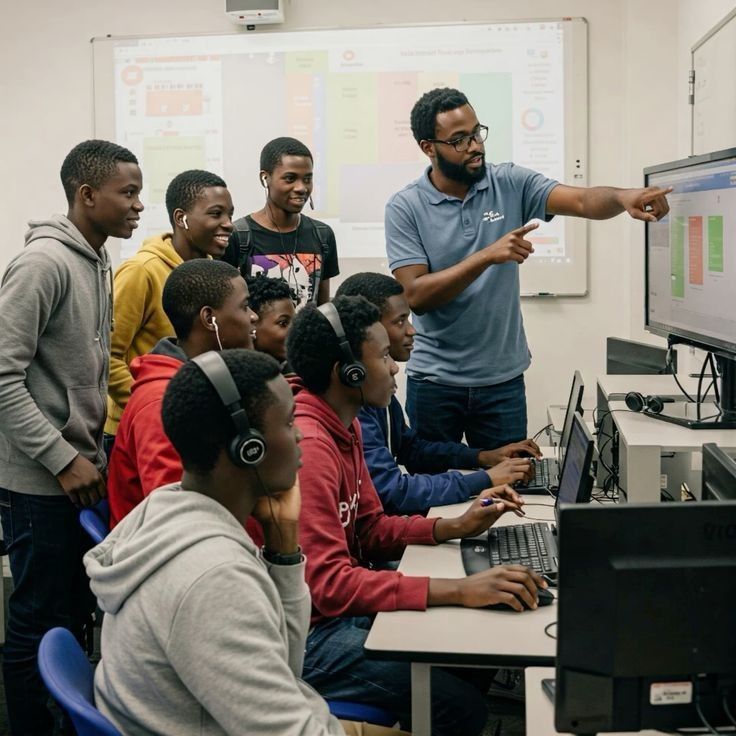
For communities that want to grow their STEM club beyond minimal resources, several funding pathways are available. Local businesses — particularly those in construction, agriculture, manufacturing, or technology — often respond positively to requests for materials, equipment, or modest financial sponsorship of community STEM activities. State government education departments have small community programme budgets that community leaders can access through proper applications. International NGOs including Engineers Without Borders and Practical Action have Nigerian country programmes that support community-level STEM education.
The Long-Term Community Impact of Investing in STEM Clubs in Nigeria
Communities that establish thriving STEM clubs create a compounding educational legacy. The first generation of STEM club members who go on to study engineering or computer science at university return as the most credible possible mentors for the next generation. Community pride in its young scientists and engineers creates a culture of intellectual aspiration that elevates educational expectations across the board.
In a country where the demand for skilled engineers, data scientists, software developers, biomedical researchers, and technology specialists dramatically outpaces supply, communities that invest early in STEM education are not just serving their own development — they are contributing to Nigeria’s national economic future.
