
The Burden of Eye Disease in Nigerian Communities and Why Screening Matters
Visual impairment is far more prevalent in Nigerian communities than most community leaders recognise. Nationally representative surveys estimate that more than one million Nigerians are blind and a further several million have severe visual impairment, the large majority of whom have never been examined by an eye specialist. In rural communities, where eye specialist services may be more than a day’s travel away, the proportion of undiagnosed and untreated visual impairment is even higher than national averages suggest.
The economic and social consequences of untreated visual impairment in Nigerian communities are substantial. Visual impairment reduces agricultural productivity, limits educational achievement, restricts employment options, and increases dependence on family and community support. Children with uncorrected refractive errors who simply need spectacles underperform academically not because of any learning difficulty but because they cannot see the blackboard clearly. Community eye health screening that identifies these children and connects them with corrective spectacles produces immediate, visible educational improvement.
Basic Eye Health Screening Techniques Community Health Workers Can Use in Nigeria
Community health workers can perform three highly valuable eye screening assessments without any specialist training or expensive equipment. Visual acuity testing using a printed Snellen chart or an E-chart identifies individuals with significant visual impairment that may benefit from corrective lenses or specialist referral. The E-chart is particularly useful in Nigerian community contexts where literacy levels vary, as it requires no letter recognition. Testing visual acuity requires only a printed chart, adequate lighting, and a measured distance of six metres between the chart and the person being tested.
External eye examination involves systematic observation of the eye and surrounding structures for redness, discharge, eyelid abnormalities, visible opacity, and obvious structural abnormalities. This identifies common conditions including conjunctivitis, trachoma, and visible cataracts that require treatment or referral. Simple torch examination of the eye, while not equivalent to specialist slit lamp examination, allows community health workers to identify gross abnormalities that warrant urgent referral.
Symptom-based screening involves systematically asking community members about visual difficulties including blurred vision, eye pain, excessive tearing, and light sensitivity. This approach identifies individuals who may need referral even when examination findings are unremarkable.
Establishing Referral Pathways for Community Eye Health Screening in Nigeria
Community eye health screening is only as valuable as the referral pathways available for individuals who screen positive. A community health worker who identifies a probable cataract or significant refractive error but has no reliable pathway to connect that individual with treatment is creating awareness without benefit and potentially causing additional distress. Establishing functioning referral pathways before beginning community eye screening is therefore an essential preparation step.
Identifying the nearest eye clinic, whether in a state specialist hospital, a missionary hospital, a NGO eye care programme, or a private ophthalmology practice, and understanding its services, costs, and appointment procedures allows community health workers to provide specific, actionable referral guidance. Organisations including Sightsavers, the Fred Hollows Foundation, and Orbis International operate eye care outreach programmes across Nigerian states that provide free cataract surgery, spectacles, and trachoma treatment. Community health workers who establish relationships with these programmes create access pathways for community members who could not otherwise afford eye care.
Integrating Eye Health Screening Into Community Health Programmes in Nigeria
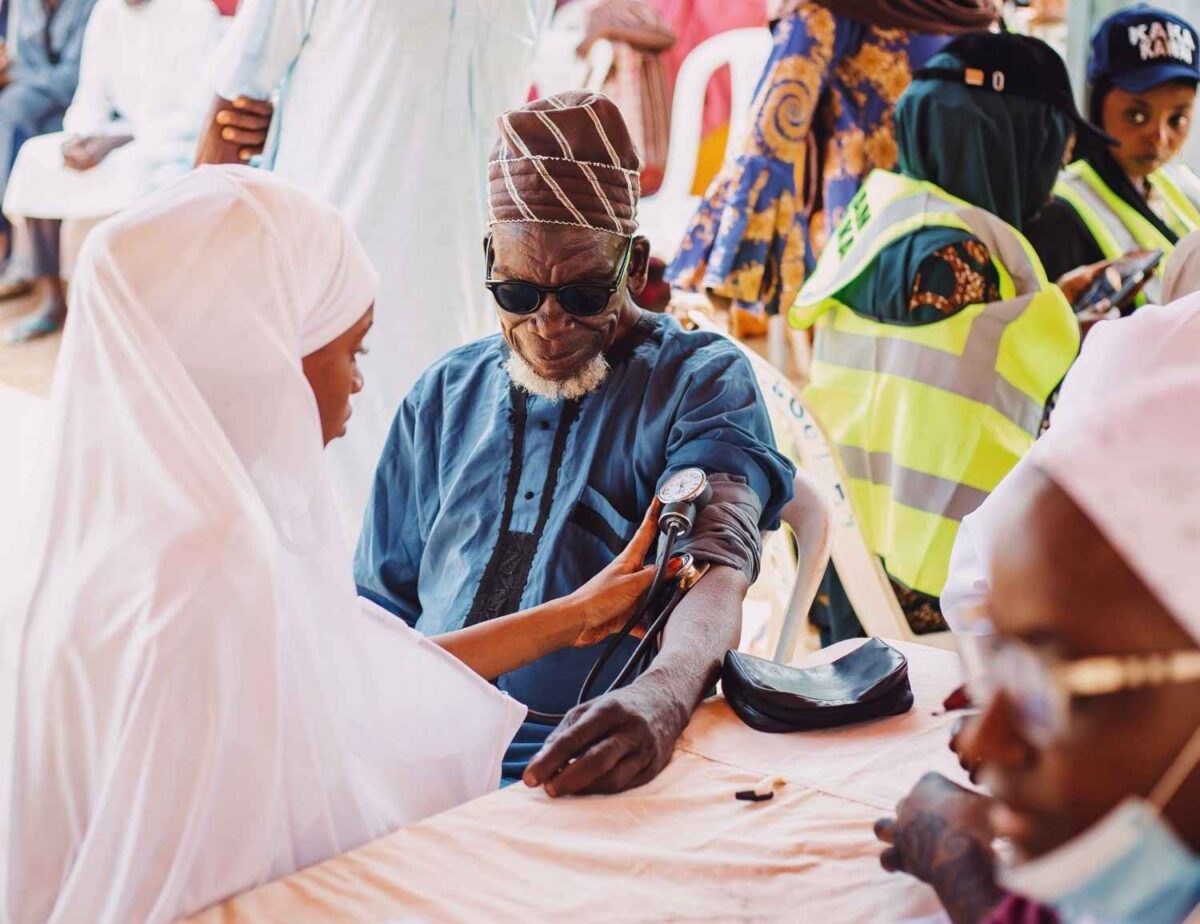
Eye health screening is most effectively integrated into existing community health programme structures rather than established as a separate, standalone service. Community health days, events that already bring community members together for immunisation, blood pressure screening, and antenatal care, are natural opportunities to add eye screening as an additional service. The incremental cost and effort of adding basic visual acuity testing and external eye examination to an existing community health event is modest, and the diagnostic yield, the number of community members identified as needing eye care, is consistently high in Nigerian communities where eye care has historically been inaccessible.
School eye health screening programmes, involving systematic visual acuity testing of all children in a school, combine broad screening coverage with a captive population that is easy to follow up through teachers and parents. Communities that establish annual school eye health screening, linked to a reliable spectacle provision programme, consistently find that the educational performance improvements are among the most visible and rapidly appreciated community health outcomes they can demonstrate.
Advocacy for Eye Health Infrastructure in Nigerian Communities
Community advocacy for better eye health services requires evidence, including data on the prevalence of visual impairment in the community, the number of individuals identified through screening who need treatment, and the economic and social impact of untreated visual impairment on community productivity and wellbeing. Community health workers who maintain records of eye health screening findings, referral outcomes, and treatment access difficulties create the evidence base for advocacy to local government health authorities, state specialist hospital administrations, and international eye health organisations.
The Nigerian National Programme for Prevention of Blindness, operated through the Federal Ministry of Health, provides the national policy framework for community eye health services. Community leaders who engage with this programme, advocating for their communities to be included in outreach activities and requesting the training and referral support that will make community eye health screening sustainable, are accessing existing government infrastructure for community eye health improvement.
