
Why Community-Level Flood Early Warning Systems Are Essential in Nigeria
Nigeria’s national flood warning infrastructure — maintained by the Nigeria Hydrological Services Agency and the Nigeria Meteorological Agency — provides national and regional forecasts that are invaluable for government emergency preparedness but are often too general and too delayed to protect specific vulnerable communities in time.
A community in Lokoja, Onitsha, or Makurdi that is warned of rising river levels twenty-four hours in advance has significantly more time to evacuate vulnerable households, move livestock and assets, and prepare emergency response than one that receives no warning at all. However, twenty-four hours of general warning must be translated into community-specific action plans to create actual protection.
Community flood early warning systems complement national forecasting infrastructure with local specificity by monitoring the water levels, rainfall intensities, and drainage conditions in the specific locations that determine flooding risk for individual communities.
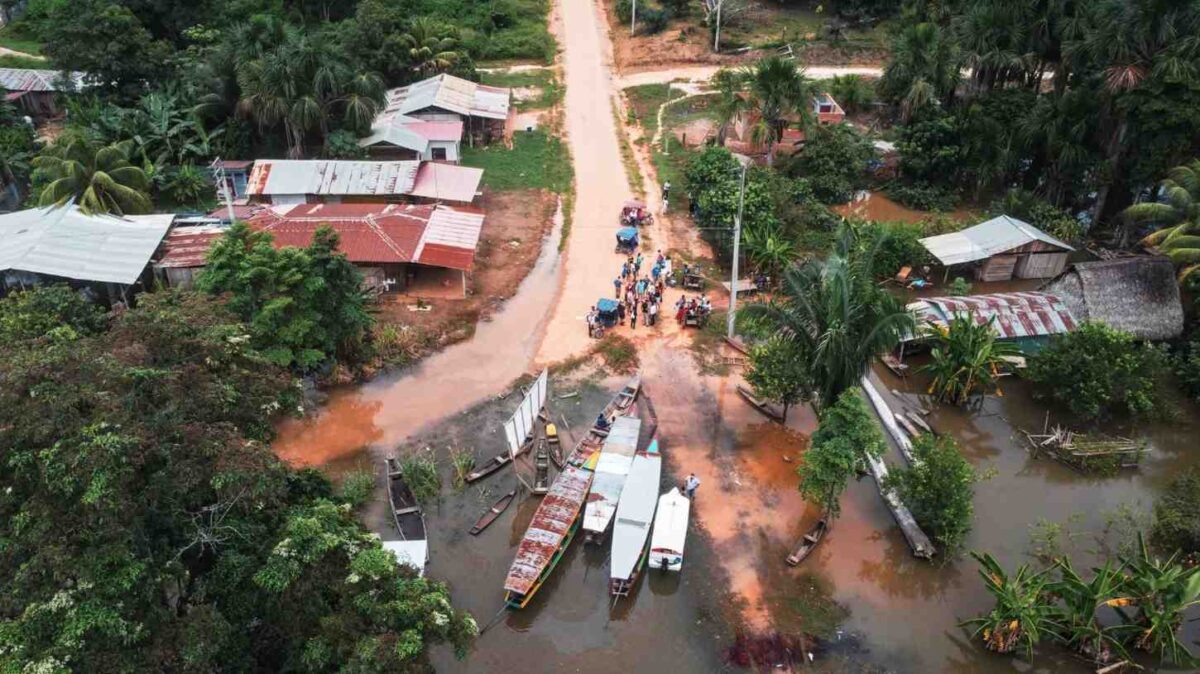
When community members can observe their own river gauge, their own rain gauge, and their own drainage status, they can make community-specific evacuation and protective action decisions faster and more accurately than any external warning system can guide.
The Components of a Practical Community Flood Early Warning System in Nigeria
A practical community flood early warning system in Nigeria consists of four components:
Observation
Observation infrastructure — water level gauges on local rivers and streams, rain gauges, and visual inspection protocols for drainage system status — provides the real-time local data on which warnings are based.
These instruments can be fabricated locally at minimal cost using simple materials or purchased as low-cost commercial units from Nigerian suppliers.
Communication
Communication infrastructure connects observers to decision-makers, typically through a WhatsApp group including community leaders, emergency response teams, and local government officials.
Dissemination
Dissemination systems — community alarm protocols including mobile phone alerts, community bell systems, or designated community wardens whose responsibility is to alert households in high-risk areas — translate decisions into community-wide protective action.
Response
Response plans — pre-agreed community evacuation routes, emergency assembly points, household preparedness checklists, and community resource lists — translate warnings into effective protective action by community members.
How to Establish a Community Flood Early Warning System in Any Nigerian Town
Establishing a community flood early warning system begins with a community flood risk assessment by identifying which households, infrastructure, and community assets are in the highest flood risk zones, what the typical warning time is between rising water levels and household flooding in each zone, and what the existing evacuation routes and emergency resources are.
This assessment, conducted participatorily with community members who have experienced previous flood events, generates the local knowledge that external flood risk assessments frequently miss.
Training a team of community flood monitors — ideally two to three per high-risk neighbourhood — creates the human observation network that makes the early warning system operational.
Monthly testing of the warning and communication system during non-emergency periods ensures that it functions reliably when a real flood event occurs.
Annual community flood preparedness exercises — simulating the response to a warning — build the muscle memory that enables fast, effective community response under emergency conditions.
Using Technology to Enhance Flood Early Warning in Nigerian Communities
Digital technology is significantly enhancing the effectiveness of community flood early warning systems in Nigeria.
Mobile Applications
Free smartphone apps including the Nigeria Flood Watch application provide community members with access to river level data, rainfall forecasts, and flood risk maps based on Nigeria Hydrological Services Agency data.
Social Media Platforms
Social media platforms — particularly WhatsApp and Twitter — allow flood warnings to propagate rapidly through community networks, reaching vulnerable households far faster than traditional announcement methods.
Automatic Water Level Sensors
Low-cost automatic water level sensors connected to mobile networks and programmed to send SMS alerts when water levels exceed pre-set thresholds provide automated monitoring capability that reduces the human observation burden while improving response speed.
Several Nigerian technology startups are developing flood monitoring solutions specifically for Nigerian community contexts, combining sensor hardware with mobile alert systems at costs accessible to community organisations and local government councils.
Building Sustainable Community Flood Preparedness Beyond Early Warning
Flood early warning is one component of the comprehensive flood risk management that vulnerable Nigerian communities need.
Early warning without evacuation routes, emergency shelters, community response teams, and post-flood recovery plans provides incomplete protection.
Communities that invest in comprehensive flood risk management — combining early warning with physical drainage improvement, household flood-proofing, community emergency response capacity, and disaster recovery planning — achieve significantly better flood outcome resilience than those that focus on warning alone.
Partnership with the National Emergency Management Agency, state emergency management agencies, and local government disaster risk reduction units provides access to technical expertise, emergency resources, and training support that community organisations cannot generate independently.
Communities that have established functioning early warning systems and demonstrated organised emergency response capacity are consistently given priority access to government disaster risk reduction resources and post-disaster recovery support.
