
Why Solar Energy Is the Right Solution for Off-Grid Nigerian Communities
Nigeria has more than 200 gigawatts of solar energy potential — among the highest in Africa — yet more than 85 million Nigerians have no reliable access to electricity. For off-grid communities, the national grid is not a realistic near-term solution. Infrastructure costs, distance from transmission lines, and decades of underinvestment in grid expansion make solar energy in Nigerian communities the most practical and economically viable path to energy access.
Solar technology costs have fallen by more than 80 percent over the past decade. A solar home system that would have cost the equivalent of several hundred thousand naira a decade ago is now accessible at a fraction of that cost, often through flexible payment arrangements that make it affordable for households across income levels.
What Solar Energy Can Power in a Typical Nigerian Community
Modern solar energy systems available to Nigerian communities can power a wide range of essential services and household needs. Basic solar home systems power LED lighting, phone charging, and small fans — the fundamental needs that make homes functional after dark and keep families connected. Mid-range systems power televisions, radios, and small refrigerators — supporting both information access and food security. Commercial-scale community solar installations power primary health centres, schools, markets, and community water pumps.
Solar-powered boreholes are particularly transformative in communities where water access has previously required hours of manual labour or dangerous dependence on unsafe sources. When a community health centre has reliable solar power, it can refrigerate vaccines, run diagnostic equipment, and maintain lighting during deliveries — directly improving health outcomes.
How Nigerian Communities Can Access Solar Energy Solutions Affordably.
Pay-as-you-go solar providers including companies like Lumos, Rensource, and Yellow Star operate across Nigerian markets with flexible payment models that allow households to begin with small daily payments and upgrade over time. NGO-facilitated programmes, often funded by international development partners, have brought community solar to remote areas in multiple Nigerian states through grant-funded installations with trained local maintenance teams.
What Makes Solar Energy Projects in Nigerian Communities Succeed Long-Term
The most important factor in sustainable solar energy for Nigerian communities is not the technology — it is the human infrastructure around it. Communities that invest in training at least two local solar technicians who can perform routine maintenance, diagnose common faults, and source replacement parts from state capitals or online suppliers are dramatically more likely to maintain functional systems over five or ten years.
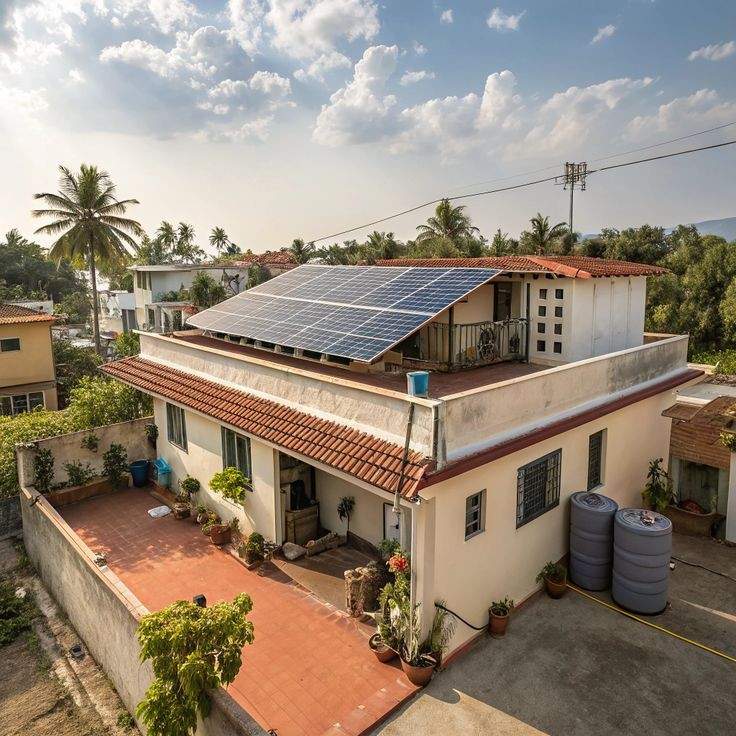
Clear community ownership structures — including revenue collection for shared systems, maintenance fund management, and transparent governance of community energy assets — prevent the disputes and neglect that have ended otherwise well-implemented solar projects in Nigeria. Communities that treat solar infrastructure the same way they treat other shared community assets, with clear rules, designated custodians, and community-wide accountability, achieve the best long-term outcomes.
The Wider Community Development Impact of Solar Energy in Nigeria
The development impact of reliable solar energy in Nigerian communities extends far beyond lighting. Children who can study after dark consistently achieve better academic outcomes. Health centres with reliable power can provide a wider range of services, retain better-qualified staff, and handle emergencies more effectively. Small businesses that previously lost productivity to irregular power — including food processing, tailoring, barbering, and phone charging services — become more viable and employ more community members.
The evidence from Nigerian communities that have successfully transitioned to solar energy consistently shows that energy access is not just an infrastructure improvement — it is a development accelerator that amplifies the impact of every other community investment.
