
Why Community Survey Data Changes the Quality of Local Development Decisions in Nigeria
Development decisions made without data tend to reflect the priorities of whoever has the most access to decision-makers rather than the priorities of the community as a whole. Community surveys for local development in Nigeria democratise the evidence base — ensuring that the voices of women, youth, elderly residents, people with disabilities, and the economically marginalised are captured in the data that shapes decisions.
Research on community-driven development across Sub-Saharan Africa consistently shows that projects selected through systematic community needs assessment are more likely to be completed, more likely to be maintained, and more likely to produce the intended outcomes than projects selected through top-down or politically driven processes. The data does not just improve decisions — it improves ownership and sustainability.
What to Measure in a Community Development Survey in Nigeria
Effective community surveys for local development in Nigeria measure three categories of information. Baseline conditions — current access to water, electricity, health services, schools, roads, and markets — establish what exists and at what quality. Priority needs — community members’ own ranked assessment of what improvements would have the greatest positive impact on their lives — establish what is most important to address. Capacity and assets — existing community organisations, skills, resources, and networks — establish what the community can contribute to its own development.
Demographic disaggregation — collecting data separately for men and women, different age groups, and different geographic areas within the community — reveals inequalities that aggregate data conceals and ensures that development responses address the most disadvantaged groups.
How to Conduct a Reliable Community Survey in Nigeria on a Limited Budget
Reliable community surveys for local development in Nigeria do not require expensive consultants or complex technology. A well-designed questionnaire of fifteen to twenty questions, administered by trained community volunteers to a representative sample of households, produces data that is sufficient to guide most community development decisions.
Free tools including KoboToolbox, ODK, and Google Forms enable digital data collection that eliminates data entry errors and produces automatic summaries. Training community members as data collectors creates local capacity and builds community investment in using the results. Focus group discussions with specific community sub-groups — women, youth, farmers, traders — complement household surveys with qualitative insights that numbers alone cannot capture.
How to Present and Use Community Survey Data for Development Planning
Data from community surveys for local development in Nigeria is only useful if it reaches the people who can act on it — and if those people understand it. Simple visual presentations — bar charts showing the percentage of households reporting each problem, maps showing where problems are concentrated, tables comparing conditions across different parts of the community — make data accessible to decision-makers who are not data specialists.
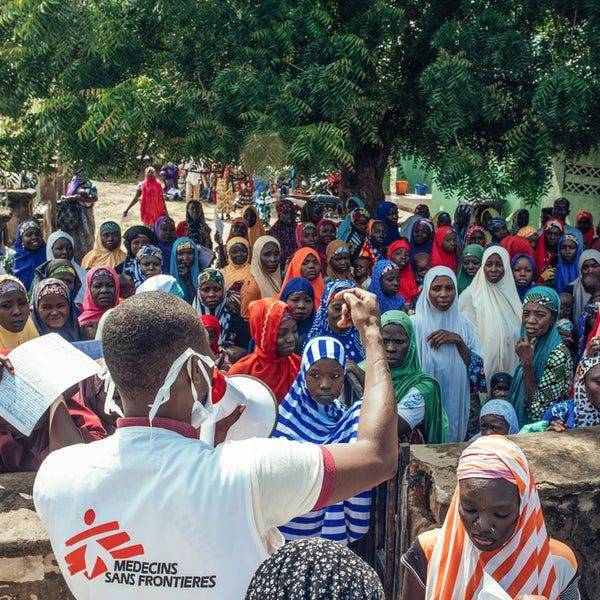
Community validation meetings — where survey findings are presented back to the community for discussion and confirmation — build trust in the data, surface any errors or gaps, and create shared understanding of community priorities. This shared understanding is the foundation for the community consensus that effective development planning requires.
Linking Community Survey Data to Local Government Planning in Nigeria
The highest-impact use of community survey data in Nigerian towns is its integration into formal local government planning processes. When community leaders present reliable survey data at local government budget consultations, they shift the basis of resource allocation from political patronage to evidence. Several Nigerian states have established formal community participation mechanisms in their annual budget processes — but these mechanisms only produce better outcomes when communities bring credible data to the table.
Building a culture of regular community data collection — annual surveys that track progress and identify new priorities — creates an ongoing evidence base that strengthens community advocacy and improves governance accountability over time.
community data in improving development decision-making.
