
Introduction
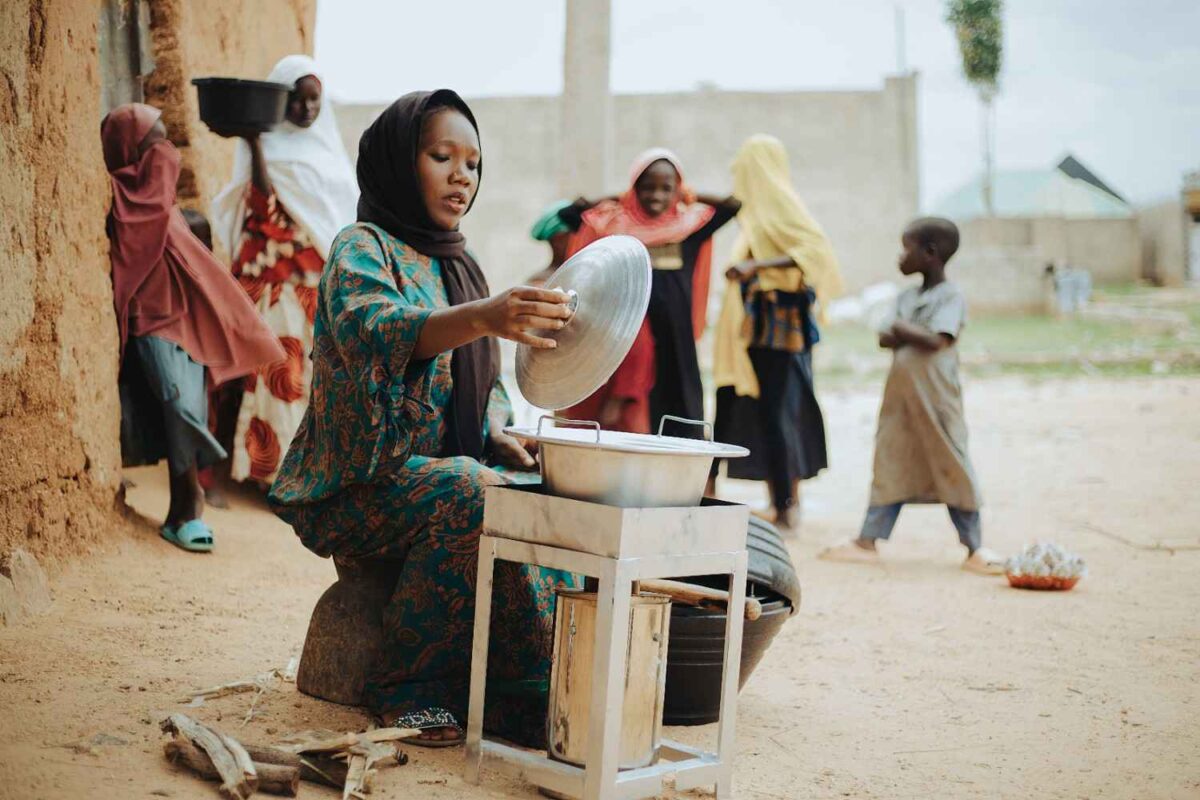
Millions of Nigerian households still rely on firewood, charcoal, crop residues, and other traditional biomass fuels for daily cooking. While these fuels remain widely available and affordable in many communities, the smoke they produce poses a serious health risk.
Indoor air pollution from traditional cooking methods contributes to respiratory diseases, eye irritation, heart conditions, pregnancy complications, and premature deaths. Women and young children are particularly vulnerable because they spend more time near cooking areas.
Clean cookstove programmes provide a practical solution by helping households transition to safer, more efficient cooking technologies that improve health while reducing fuel consumption and environmental degradation.
When communities organise these programmes collectively, adoption becomes faster, more affordable, and more sustainable.
Understanding the Health Risks of Traditional Cooking
Cooking with open fires or inefficient stoves releases harmful pollutants including fine particulate matter and carbon monoxide.
Long-term exposure increases the risk of:
- Chronic respiratory diseases.
- Pneumonia in children.
- Asthma attacks.
- Eye infections.
- Heart disease.
- Pregnancy complications.
- Burns and household accidents.
Many families are unaware that the smoke produced inside their homes can be as dangerous as outdoor air pollution.
Health education is therefore an essential first step.
Why Community-Based Cookstove Programmes Work
Individual households often face financial and informational barriers when considering cleaner cooking technologies.
Community programmes make adoption easier by:
- Organising awareness campaigns.
- Negotiating lower prices through bulk purchases.
- Demonstrating different cookstove models.
- Providing user training.
- Creating local maintenance services.
- Encouraging peer learning.
Communities are more likely to adopt new practices when they observe neighbours benefiting from them.
Collective action reduces costs and builds trust.
Step 1: Conduct a Community Needs Assessment
Every successful programme begins with understanding local realities.
Communities should identify:
- Current cooking methods.
- Common fuel sources.
- Household energy costs.
- Health concerns linked to smoke exposure.
- Women’s cooking experiences.
- Availability of alternative fuels.
- Local cooking traditions.
This information helps planners select cookstove solutions that fit community needs rather than imposing unsuitable technologies.
Step 2: Engage Community Leaders
Traditional rulers, religious leaders, women’s associations, youth groups, and community development committees play an important role in encouraging participation.
Their support helps:
- Build trust.
- Increase awareness.
- Mobilise households.
- Address misconceptions.
- Promote long-term adoption.
Strong local leadership strengthens programme success.
Step 3: Choose Appropriate Cookstove Technologies
There is no single cookstove that fits every Nigerian community.
Selection should consider:
- Fuel availability.
- Cooking habits.
- Household size.
- Cost.
- Ease of maintenance.
- Safety.
- Durability.
- Local availability of spare parts.
Communities may choose improved biomass stoves, liquefied petroleum gas (LPG) systems, biogas cookstoves, ethanol stoves, electric cookers where electricity is reliable, or other clean cooking technologies appropriate for their environment.
Technology should match local realities.
Step 4: Train Households on Proper Use
Providing cookstoves alone does not guarantee successful adoption.
Training should include:
- Safe stove operation.
- Fuel-efficient cooking practices.
- Cleaning and maintenance.
- Safe fuel storage.
- Fire safety.
- Ventilation improvements.
- Troubleshooting common problems.
Hands-on demonstrations improve user confidence and encourage consistent use.
Step 5: Support Women’s Participation
Women are the primary users of household cooking technologies in many Nigerian communities.
Their experiences should guide programme design.
Women’s groups can contribute by:
- Demonstrating cookstoves.
- Sharing user experiences.
- Organising savings groups.
- Supporting maintenance services.
- Educating other households.
When women participate in programme planning, adoption rates often improve significantly.
Step 6: Develop Sustainable Financing
Affordability remains one of the biggest barriers to clean cooking adoption.
Communities can explore:
- Cooperative savings schemes.
- Microfinance loans.
- Installment payment plans.
- Government support programmes.
- Corporate social responsibility initiatives.
- Development partner grants.
- Community revolving funds.
Flexible financing makes cleaner technologies accessible to more households.
Environmental Benefits
Clean cookstove programmes contribute to environmental sustainability by:
- Reducing firewood consumption.
- Slowing deforestation.
- Lowering greenhouse gas emissions.
- Improving local air quality.
- Conserving natural resources.
Protecting forests also supports biodiversity and strengthens climate resilience.
Healthy households and healthy ecosystems go together.
Using Digital Platforms for Community Learning
Digital technology can help communities expand access to clean cooking information.
Knowledge-sharing platforms such as SINNTS allow environmental experts, public health professionals, engineers, community organisations, researchers, and clean energy advocates to publish educational resources, organise virtual training sessions, exchange practical experiences, and promote innovations in sustainable household energy.
Communities can also access educational materials covering environmental health, renewable energy, climate action, and household safety.
Digital collaboration accelerates community learning.
Monitoring Programme Success
Communities should regularly evaluate programme outcomes using measurable indicators such as:
- Number of households adopting clean cookstoves.
- Reduction in firewood consumption.
- Improvements in indoor air quality.
- Reduction in respiratory illnesses.
- Household fuel cost savings.
- User satisfaction.
- Women’s participation.
- Environmental improvements.
Monitoring helps communities improve future programme implementation.
Looking Ahead
Nigeria’s transition toward cleaner household energy requires collaboration between communities, government agencies, private companies, researchers, and development partners.
Community-led clean cookstove programmes demonstrate that improving public health and protecting the environment can happen simultaneously when local people are actively involved.
Every cleaner kitchen contributes to a healthier community.
Conclusion
Clean cookstove programmes offer Nigerian communities a practical opportunity to improve household health, reduce indoor air pollution, lower fuel costs, and protect the environment.
Through community engagement, appropriate technology selection, women’s leadership, sustainable financing, continuous education, and digital knowledge-sharing platforms like SINNTS, communities can successfully expand access to safer cooking solutions.
Investing in clean cooking is an investment in healthier families, stronger communities, and a more sustainable future for Nigeria.
