
Introduction
Agriculture remains the backbone of rural livelihoods in Nigeria, providing food, employment, and income for millions of households. Yet many smallholder farmers continue to face challenges such as unpredictable weather, declining soil fertility, pests, diseases, limited access to markets, and rising production costs.
To address these challenges, communities across Nigeria are increasingly embracing smart agriculture—an approach that combines scientific knowledge, modern technology, and sustainable farming practices to improve productivity while protecting natural resources.
Rather than relying solely on large-scale government programmes, many communities are now teaching smart agriculture through local farmer groups, cooperatives, extension services, schools, and digital learning platforms. These grassroots efforts are helping smallholders adopt practical innovations that increase yields and strengthen resilience to climate change.
What Is Smart Agriculture?
Smart agriculture refers to farming practices that use technology, data, and scientific methods to produce more food efficiently while reducing environmental impact.
For Nigerian smallholders, smart agriculture does not necessarily require expensive machinery. Instead, it focuses on practical improvements such as:
- Climate-smart farming practices.
- Improved seed varieties.
- Soil testing and nutrient management.
- Water conservation techniques.
- Digital weather information.
- Precision fertilizer application.
- Integrated pest management.
- Mobile agricultural advisory services.
These approaches help farmers make better decisions throughout the farming season.
Why Community-Level Training Matters
Farmers are more likely to adopt new techniques when they see them working in fields similar to their own.
Community-based training provides practical demonstrations where farmers can observe planting methods, irrigation systems, pest control strategies, and harvesting techniques under local conditions.
Learning from neighbours also builds confidence.
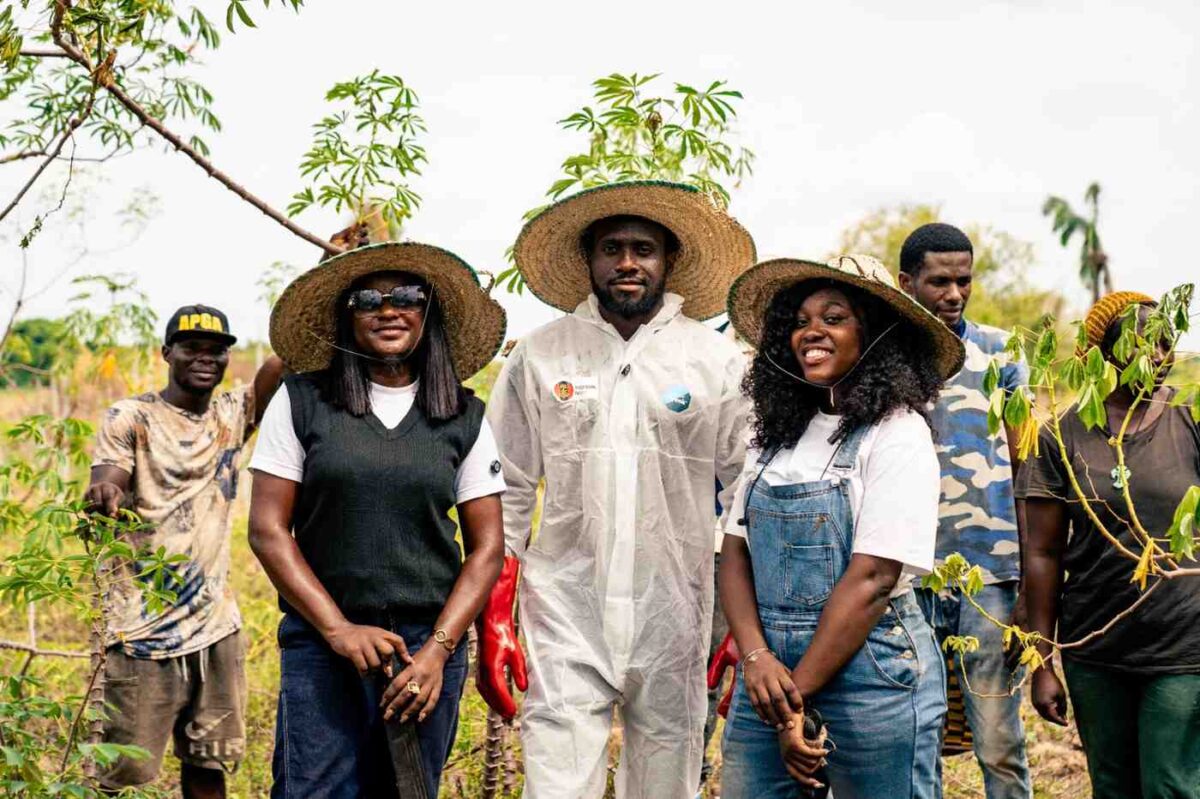
When successful farmers share their experiences, others are encouraged to experiment with new methods that improve productivity.
Knowledge spreads faster through trusted community relationships.
Demonstration Farms as Living Classrooms
One of the most effective approaches to agricultural education is the use of demonstration farms.
These plots allow farmers to compare traditional farming methods with improved practices such as:
- Proper crop spacing.
- Improved seed selection.
- Mulching techniques.
- Organic compost production.
- Efficient irrigation methods.
- Crop rotation.
- Conservation agriculture.
Seeing visible differences in crop performance motivates farmers to adopt proven techniques on their own farms.
Practical learning often has greater impact than classroom instruction alone.
Using Digital Technology to Support Farmers
Mobile technology has become an important agricultural tool across Nigeria.
Farmers increasingly receive:
- Weather forecasts.
- Market price updates.
- Pest outbreak alerts.
- Crop management advice.
- Livestock health information.
- Planting calendars.
- Soil management recommendations.
Access to timely information allows farmers to make informed decisions that reduce losses and improve yields.
Digital agriculture brings expert knowledge directly into rural communities.
Climate-Smart Farming Practices
Climate change continues to affect rainfall patterns, temperatures, and crop productivity across Nigeria.
Community training programmes now emphasize climate-smart practices such as:
- Drought-resistant crop varieties.
- Rainwater harvesting.
- Agroforestry.
- Conservation tillage.
- Efficient fertilizer use.
- Cover cropping.
- Water-efficient irrigation.
- Diversified farming systems.
These techniques help farmers adapt to changing environmental conditions while protecting long-term agricultural productivity.
Strengthening Farmer Cooperatives
Farmer cooperatives play an important role in spreading agricultural innovation.
Through organised groups, farmers can:
- Share knowledge.
- Purchase farm inputs collectively.
- Access extension services.
- Secure agricultural loans.
- Sell produce in larger quantities.
- Participate in training programmes.
- Adopt new technologies together.
Collective learning reduces costs and increases the adoption of improved farming methods.
The Role of Agricultural Extension Workers
Extension workers remain critical to community agricultural development.
They bridge the gap between research institutions and farmers by translating scientific findings into practical advice.
Extension officers help farmers:
- Identify crop diseases.
- Improve soil fertility.
- Manage pests.
- Select appropriate seed varieties.
- Apply fertilizers correctly.
- Improve post-harvest handling.
- Increase productivity sustainably.
Continuous support ensures that farmers successfully implement new techniques.
Supporting Agricultural Learning Through Digital Platforms
Digital knowledge-sharing platforms are becoming valuable resources for farmers and agricultural professionals.
Platforms such as SINNTS enable agricultural experts, extension officers, researchers, agribusiness entrepreneurs, and experienced farmers to share practical farming knowledge, publish educational content, organise virtual training sessions, and collaborate across different regions of Nigeria.
Farmers can also access learning materials on climate-smart agriculture, agribusiness management, food processing, agricultural technology, and sustainable farming practices.
By connecting people with practical expertise, digital learning platforms help expand agricultural knowledge beyond traditional classroom settings.
Encouraging Youth Participation in Agriculture
Modern agriculture offers exciting opportunities for young Nigerians.
Community programmes that introduce young people to digital farming technologies, drone applications, greenhouse farming, precision agriculture, agribusiness management, and agricultural entrepreneurship help reposition farming as a modern and profitable career.
Youth involvement brings innovation, energy, and technological skills into rural agriculture.
Investing in young farmers strengthens the future of Nigeria’s food system.
Measuring the Impact of Community Agricultural Training
Communities can evaluate agricultural training programmes using measurable indicators such as:
- Increased crop yields.
- Higher household incomes.
- Reduced post-harvest losses.
- Improved soil health.
- Adoption of climate-smart practices.
- Increased participation in farmer cooperatives.
- Greater use of digital agricultural tools.
- Improved food security.
Regular monitoring helps communities identify successful strategies and improve future programmes.
Looking Ahead
Nigeria’s growing population will require greater agricultural productivity without placing additional pressure on natural resources.
Community-based smart agriculture education provides a practical pathway toward sustainable food production, climate resilience, and rural economic development.
By combining local knowledge with scientific innovation, communities can build stronger agricultural systems capable of feeding future generations.
Conclusion
Smart agriculture is transforming the way Nigerian smallholder farmers produce food.
Through community training, demonstration farms, extension services, digital technologies, and collaborative learning platforms like SINNTS, farmers are gaining the knowledge and skills needed to improve productivity, increase resilience, and strengthen rural livelihoods.
When agricultural knowledge becomes accessible to every community, farmers are better equipped to overcome challenges, embrace innovation, and contribute to Nigeria’s long-term food security and economic growth.
