
Introduction
Nigeria cannot build a globally competitive science and technology ecosystem while leaving half of its talent underrepresented in leadership.
Across the country, more girls are participating in STEM clubs, coding bootcamps, robotics competitions, science fairs, and digital literacy programmes than ever before. While this progress is encouraging, participation alone is no longer enough. The next phase of community STEM development must intentionally prepare girls to become leaders, mentors, innovators, researchers, entrepreneurs, and decision-makers.
Communities that encourage girls to lead STEM activities create stronger learning environments, inspire younger students, and build a larger pipeline of future scientists, engineers, healthcare professionals, technology founders, and innovators who will contribute to Nigeria’s economic growth.
True inclusion means creating opportunities to lead—not simply opportunities to attend.
Why Girls’ Leadership Matters in Community STEM Programmes
Leadership develops confidence, communication skills, critical thinking, teamwork, and problem-solving abilities.
When girls lead STEM activities, they gain practical experience in organising projects, presenting ideas, mentoring peers, managing teams, and solving community challenges through innovation.
Leadership also changes community perceptions.
Younger girls begin to see STEM careers as achievable, while parents and community leaders become more supportive of girls pursuing science and technology education.
Representation creates aspiration.
Leadership creates lasting impact.
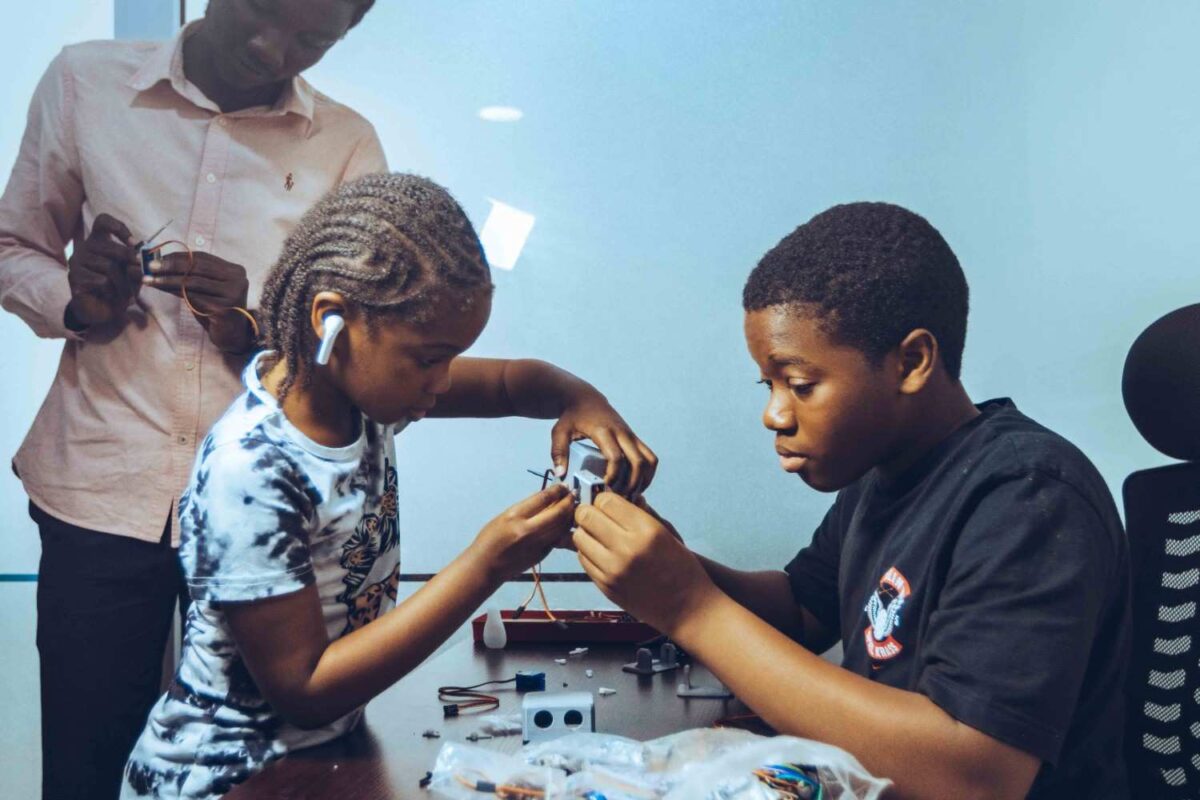
Moving Beyond Equal Participation
Many STEM programmes celebrate equal attendance between boys and girls, yet leadership positions often remain dominated by boys.
Girls should be encouraged to serve as:
- STEM club presidents
- Robotics team captains
- Coding instructors
- Innovation project coordinators
- Science competition team leaders
- Community technology ambassadors
- Digital literacy trainers
- Peer mentors
These opportunities allow girls to build practical leadership experience that extends beyond the classroom.
Breaking Long-Standing Stereotypes
For many years, science and engineering have been viewed in some communities as careers better suited to men.
Community STEM programmes have the opportunity to challenge these outdated assumptions by showcasing successful Nigerian women working in medicine, engineering, artificial intelligence, agriculture, environmental science, cybersecurity, biotechnology, and software development.
When girls regularly interact with female STEM professionals, they begin to believe that similar achievements are within their own reach.
Role models transform expectations.
Building Leadership Through Practical Projects
Leadership develops through experience rather than theory.
Community STEM education should encourage girls to lead projects that solve real community challenges such as:
- Developing simple mobile applications.
- Organising digital literacy workshops.
- Building robotics demonstrations.
- Designing clean water solutions.
- Promoting environmental conservation.
- Supporting healthcare awareness campaigns.
- Creating agricultural technology solutions.
- Teaching coding to younger children.
These experiences strengthen both technical and leadership skills simultaneously.
The Importance of Mentorship
Mentorship remains one of the strongest predictors of long-term STEM success.
Communities should connect girls with experienced professionals who can provide career guidance, technical support, and encouragement throughout their educational journey.
Mentors help girls navigate academic challenges, identify scholarship opportunities, prepare for competitions, and develop confidence in leadership roles.
Strong mentorship creates stronger leaders.
Encouraging Families to Support Girls in STEM
Parents play a major role in determining whether girls continue pursuing science and technology education.
Community awareness programmes should help families understand that STEM careers offer opportunities across healthcare, engineering, education, agriculture, research, manufacturing, environmental management, and entrepreneurship.
When parents actively encourage curiosity, experimentation, and learning, girls are more likely to remain engaged throughout their education.
Support at home strengthens success in school.
Using Digital Platforms to Expand Leadership Opportunities
Digital learning platforms allow girls to develop leadership skills beyond their local communities.
Online collaboration enables students to participate in virtual hackathons, coding challenges, innovation competitions, webinars, research discussions, and mentorship programmes with experts across Nigeria and beyond.
Knowledge-sharing platforms such as SINNTS provide opportunities for girls to publish educational content, share innovative ideas, participate in professional communities, learn from experienced practitioners, and build networks that support long-term career growth.
Digital communities remove geographical barriers and expand access to opportunity.
Schools and Community Organisations Must Work Together
Building female STEM leaders requires collaboration.
Schools, community organisations, local governments, universities, technology hubs, NGOs, and private companies should jointly organise programmes that encourage girls to lead innovation initiatives.
Partnerships can support:
- STEM leadership camps.
- Robotics competitions.
- Coding bootcamps.
- Science exhibitions.
- Community innovation challenges.
- Research mentorship programmes.
- Technology entrepreneurship workshops.
Shared responsibility creates sustainable impact.
Measuring Success Beyond Attendance
The success of community STEM programmes should not be measured only by the number of girls who attend activities.
Communities should also evaluate:
- Girls serving in leadership positions.
- STEM projects led by girls.
- Innovation competitions won by girls.
- Mentorship relationships established.
- Technology businesses started by female participants.
- Scholarships awarded.
- Community projects initiated by girls.
- Long-term STEM career progression.
Leadership outcomes provide a clearer picture of programme impact.
Looking Ahead
Nigeria’s future competitiveness depends on developing every available talent.
Communities that invest in girls as STEM leaders are investing in stronger schools, more innovative businesses, improved healthcare, sustainable agriculture, technological advancement, and inclusive economic growth.
The next generation of scientists, engineers, inventors, researchers, and technology entrepreneurs will emerge from communities that recognise leadership potential regardless of gender.
Conclusion
Community STEM education should prepare girls not only to participate but also to lead.
By providing leadership opportunities, mentorship, practical project experience, supportive family engagement, and access to digital learning platforms like SINNTS, Nigerian communities can build a generation of confident female innovators who will contribute significantly to national development.
When girls lead in STEM, communities innovate more effectively, inspire future generations, and unlock the full potential of Nigeria’s human capital.
