
Agricultural Applications of Drone Technology in Rural Nigeria
Agricultural drone technology in rural Nigeria is addressing several of the most costly challenges that smallholder farmers face. Crop monitoring drones — equipped with multispectral cameras that detect plant health variations invisible to the human eye — allow farmers to identify disease outbreaks, nutrient deficiencies, and water stress in their crops days or weeks before visible symptoms appear, enabling targeted interventions that prevent the large-scale crop losses that have historically reduced smallholder incomes.
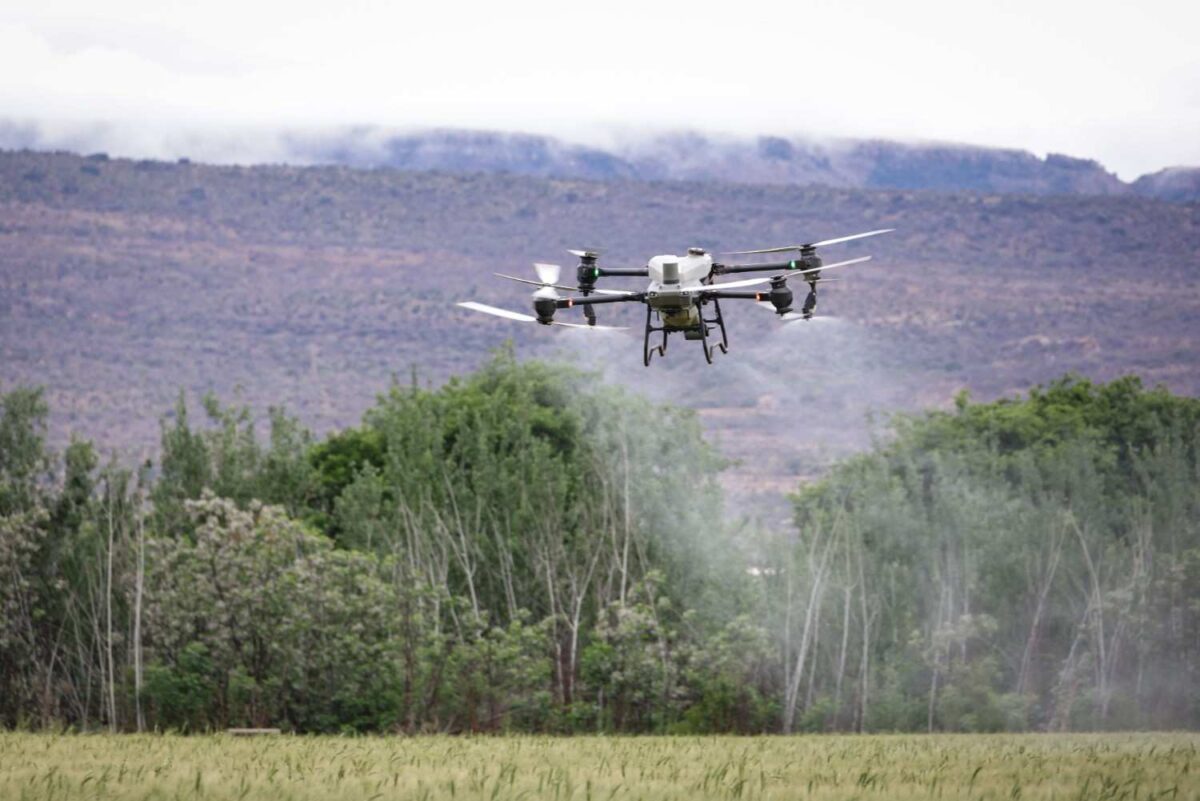
Drone-based precision spraying technology enables application of pesticides and fertilisers at the exact locations and quantities that specific crop conditions require, reducing input costs, minimising environmental contamination from over-application, and improving treatment effectiveness compared to manual or broadcast spraying. In rice farming communities in Kebbi, Kano, and Benue states, pilot programmes using agricultural drones have demonstrated input cost reductions of twenty to thirty percent alongside yield improvements that make the technology economically compelling even at current access cost.
Health Delivery Applications of Drone Technology in Rural Nigerian Communities
Medical supply delivery by drone is the health application of drone technology with the most direct and immediate relevance for rural Nigerian communities. The challenge of delivering essential medicines, blood products, vaccines, and diagnostic samples between health facilities and remote communities — across roads that are impassable in rainy seasons, across rivers without bridges, and across distances that consume hours of vehicle travel time — is one of the most persistent operational failures of Nigeria’s rural health system.
Zipline, the American drone delivery company that operates the world’s largest drone delivery network, has worked with African governments including Ghana and Rwanda to demonstrate that drone delivery of blood products and medicines to remote health facilities can dramatically reduce stockouts, decrease blood product wastage, and cut delivery times from hours to minutes. The case for expanding similar services to rural Nigerian states is well-supported by the evidence from these programmes.
How Nigerian Communities Can Advocate for Drone Technology Access
Community advocacy for drone technology in rural Nigeria should focus on the specific applications with the highest demonstrated impact in Nigerian contexts — agricultural monitoring, medical supply delivery, and health facility connectivity — and on the government agencies and private sector actors best positioned to deploy these applications.
The Nigerian Civil Aviation Authority regulates drone operations in Nigeria and is progressively developing a framework that enables commercial drone applications while managing safety and security risks. State ministries of agriculture and health are the primary government stakeholders for drone deployment in rural community contexts. Community leaders who document the specific access and delivery challenges that drone technology could address — with data on delivery failures, stockouts, crop losses, and travel times — create the evidence base that makes advocacy for drone technology deployment concrete and compelling.
Training and Employment Opportunities in Drone Technology for Nigerian Youth
The expansion of drone technology applications in rural Nigeria is creating training and employment opportunities for Nigerian youth that are both technically interesting and locally applicable. Drone pilot certification programmes, available through Nigerian aviation training organisations and online platforms, provide pathways to employment in agricultural surveying, infrastructure inspection, media production, and logistics operations.
Community technology hubs and agricultural extension programmes in several Nigerian states are beginning to incorporate drone technology training into their curricula — recognising that the young Nigerians who grow up in the communities where agricultural and health drone applications will expand are the most natural source of the trained operators those applications will need. Communities that invest in drone technology literacy and certification training for their youth today are positioning those young people at the front of a technology adoption wave that will create significant employment over the next decade.
The Future of Drone Technology in Nigerian Rural Community Development
The trajectory of drone technology development globally — toward lower costs, greater payload capacity, longer range, and higher automation — points toward an expanding range of rural Nigerian community applications over the coming decade. Beyond agriculture and medicine delivery, future applications include infrastructure inspection for bridges, pipelines, and electricity lines; environmental monitoring for deforestation, erosion, and pollution; disaster response coordination following floods, fires, and other emergencies; and educational content delivery to communities with limited connectivity.
Communities that begin building drone technology awareness, advocacy capacity, and technical literacy today are investing in their readiness to benefit from applications that are still emerging. The communities best positioned to benefit from drone technology are those whose leaders understand what it can do, whose youth are trained to operate it, and whose government relationships are strong enough to attract the programmes and investments that bring the technology to where it is needed most.
