
Why Teaching Girls to Code at the Community Level Is One of the Highest-Return Investments in Nigeria
A Deep Economic and Social Inefficiency
Nigeria’s gender gap in technology is both a structural inequality and a missed economic opportunity.
Women and girls make up more than half of Nigeria’s population, yet they remain significantly underrepresented in the country’s technology workforce. This imbalance is not just a question of fairness — it has measurable economic consequences. Diverse teams consistently produce better technological solutions, more inclusive digital products, and systems that reflect broader societal needs.
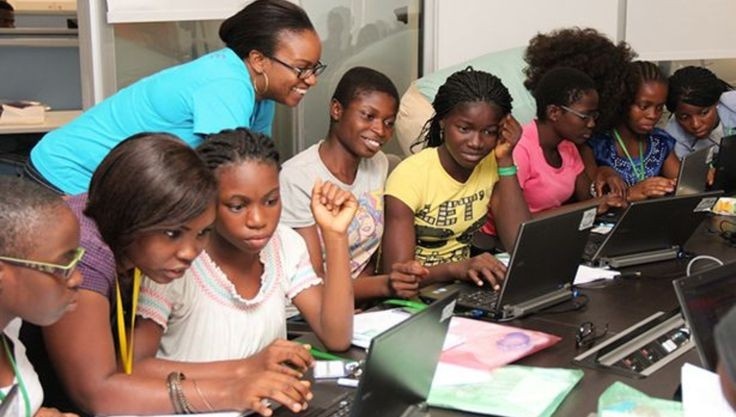
Despite this, most Nigerian girls never gain meaningful exposure to technology education. Community-level coding programmes offer one of the most practical ways to change this reality by reaching girls where they are — within their schools, homes, and neighbourhoods.
Understanding the Barriers Girls Face in Technology Access
The barriers preventing girls from entering technology fields in Nigeria are well-documented and deeply rooted in social structure.
In many communities, cultural expectations still frame technology as a male-dominated field. This perception is reinforced by the lack of visible female role models in technology, making it difficult for girls to imagine themselves in similar roles.
Household resource allocation can also favour boys when educational opportunities are limited, particularly when families must choose how to invest in technology tools or training. In school environments, shared access to limited computing resources can result in boys dominating usage, leaving girls with less practical experience.
Equally important is the learning environment itself. Many girls lack access to safe, supportive spaces where they can experiment, make mistakes, ask questions, and build confidence without fear of judgment or exclusion.
Designing Community-Level Coding Programmes That Work
Effective community coding initiatives for girls must address these barriers directly and intentionally.
One of the most impactful approaches is the creation of girl-only learning spaces, especially in the early stages of engagement. These environments help eliminate social pressure and allow learners to build confidence at their own pace.
Equally important is the presence of female instructors and mentors. Seeing women actively working in technology provides powerful proof that such careers are attainable and legitimate.
Parental engagement is another critical factor. When parents — particularly fathers — understand the economic value of digital skills, they are more likely to support their daughters’ participation and provide necessary resources.
Finally, successful programmes create visible pathways from learning to opportunity. Whether through internships, freelancing, entrepreneurship, or employment, girls need to see how coding skills translate into real-world outcomes.
What Girls Should Learn First
For community-level coding programmes in Nigeria, the most effective skills are those that combine accessibility with immediate economic relevance.
These include:
- Web development (HTML, CSS, JavaScript): Enables girls to build websites and digital platforms for businesses and individuals
- Digital marketing and social media management: Provides early income opportunities while building technical confidence
- Python programming: Useful for data analysis, automation, and applications in sectors such as education, health, and finance
- Mobile app development (Android): Opens access to Nigeria’s largest mobile user base and growing app economy
These skills are not only educational — they are directly linked to income-generating opportunities in the local economy.
The Multiplier Effect of Investing in Girls’ Tech Education
Community investment in girls’ coding education produces returns at multiple levels.
At the individual level, it creates pathways to financial independence and career mobility. At the community level, it produces visible role models who inspire other girls to pursue similar opportunities. At the national level, it helps address Nigeria’s shortage of technology talent in a rapidly digitising economy.
There is also a broader global implication: every successful community programme strengthens the evidence that when girls are given access, mentorship, and opportunity, they perform exceptionally well in technology fields.
Conclusion: A High-Return Investment in the Future
Teaching girls to code at the community level is not simply an educational initiative. It is an economic strategy, a social intervention, and a long-term development investment.
By removing barriers, building supportive learning environments, and connecting skills to real opportunities, communities can unlock a vast pool of untapped talent.
The result is transformative: empowered girls, stronger communities, and a more competitive national economy built on inclusion rather than exclusion.
